
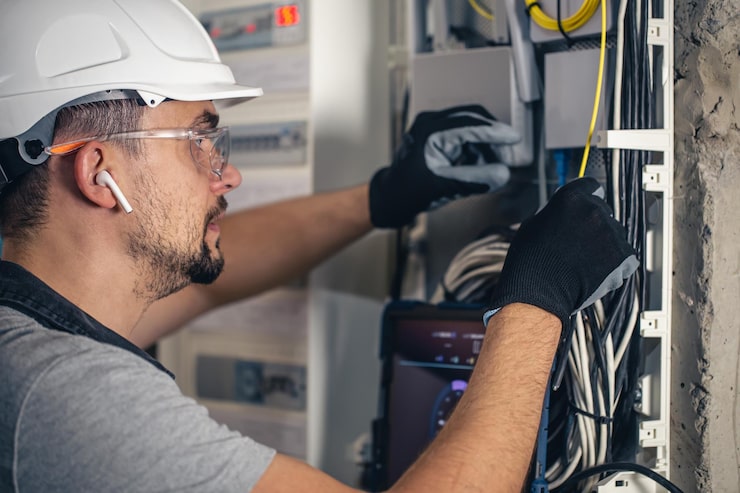
Every modern business depends on connectivity. Emails, cloud applications, video calls, payment systems, and internal communication tools all rely on one thing working perfectly behind the scenes: the physical network that ties everything together. While wireless technology has advanced significantly over the past decade, the foundation of any high-performing business network is still wired infrastructure. That is where a professional network cabling contractor becomes one of the most important investments a business can make.
The Backbone Behind Every Connected Business
Think about the last time your internet slowed to a crawl during a busy workday. Chances are, the problem was not your internet provider. In most cases, slowdowns, dropped connections, and inconsistent performance trace back to poor cabling infrastructure. Cables that were installed without proper planning, low-quality materials used to cut costs, or wiring that was never organized or labeled correctly all create compounding problems over time.
A qualified network cabling contractor does not just run wires from one point to another. They engineer a structured cabling system that is designed to support your current operations and scale as your business grows. Every cable has a purpose, every connection is tested, and every run is documented so that future troubleshooting or upgrades take minutes rather than hours.
What a Network Cabling Contractor Actually Does
The scope of work a professional cabling contractor handles goes well beyond what most business owners imagine. Before a single cable is pulled, a good contractor will conduct a thorough site assessment. They walk your space, measure distances, identify potential interference sources, and map out the most efficient and effective routing paths for your cabling system.
From there, the work typically includes installing Category 6 or Category 6A ethernet cables for high-speed data transmission, setting up structured patch panels in a central network rack, mounting and configuring wall plates and keystones at each workstation or device location, and running fiber optic cabling for environments that require high bandwidth over longer distances.
Once installation is complete, a reputable contractor does not simply hand over the keys and walk away. Every cable run is tested with professional grade equipment to verify that it meets industry performance standards. Certification reports are provided so you have documented proof that your infrastructure was installed correctly and is performing at the level your business requires.
Why Cutting Corners on Cabling Always Costs More Later
It is tempting to hand cabling work off to whoever offers the lowest quote or to let a general handyman handle the job. In the short term, this approach seems like a smart way to save money. In reality, improper cabling installation creates problems that are expensive, disruptive, and sometimes irreversible without a full reinstallation.
Poor cable management leads to signal degradation, especially as more devices are added to the network. Cables that are bent too sharply, bundled too tightly with power cables, or run through areas with high electromagnetic interference will underperform consistently. Unlabeled and undocumented cabling turns every future IT task into a guessing game, adding hours of labor to even simple changes.
A professional network cabling contractor follows the standards set by the Telecommunications Industry Association and the Electronic Industries Alliance. These standards exist for a reason. They ensure that your cabling infrastructure performs reliably, remains maintainable over time, and does not become an obstacle to your business operations.
Structured Cabling for the Modern Workplace
The way businesses use their networks has changed dramatically. Open floor plans mean workstations move frequently. Conference rooms need to support video collaboration. Security cameras, access control systems, and IoT devices all require dedicated network connections. A modern network cabling contractor understands that today’s cabling projects are about building flexible, future-ready infrastructure rather than simply connecting computers to a router.
This is why experienced contractors plan for growth from day one. They install conduit where appropriate so that new cables can be added without tearing into walls. They design patch panel layouts with room to expand. They choose cable categories that will support the bandwidth demands of tomorrow, not just today.
Choosing a Network Cabling Contractor Worth Trusting
When selecting a cabling contractor, credentials and experience should be your first filter. Look for contractors who are certified through recognized programs and who carry proper licensing and insurance. Ask to see examples of previous commercial installations and request references from clients in similar industries.
Communication matters just as much as technical skill. A good contractor will explain their process clearly, provide a detailed written scope of work before the project begins, and keep you informed throughout the installation. Surprises during a cabling project are rarely good news, and a professional team works proactively to prevent them.
Reliability in your network starts long before you power on a single device. It starts with the quality of the cabling infrastructure running through your walls, ceilings, and floors. A skilled network cabling contractor builds that foundation with precision, and the businesses that invest in getting it right from the start are the ones that spend less time dealing with connectivity problems and more time focusing on what actually matters: running and growing their business.