
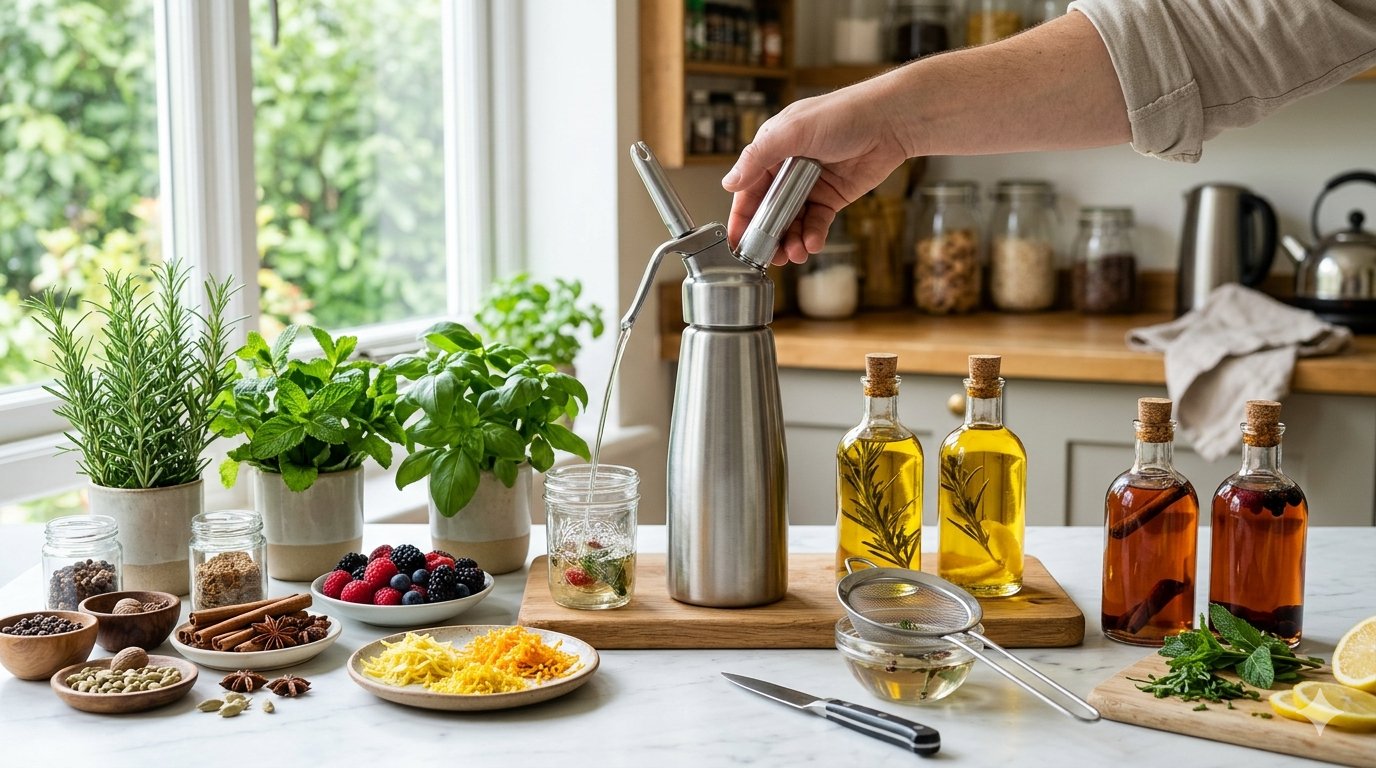
Infusing flavour into liquids traditionally takes days of patient waiting and regular tasting, yet a pressurised dispenser can shorten the process to minutes. The pressure helps liquid penetrate herbs, fruit and spices, drawing out aromatic compounds quickly. This makes it attractive to home cooks who want fresh flavoured syrups, oils and dressings without long preparation. This guide explains how the method works, which ingredients suit it, and how to follow safe, careful steps so that every batch tastes vibrant, fresh and clean.
How Rapid Infusion Works
When a liquid and a flavouring ingredient share a sealed, pressurised bottle, gas is forced into the plant material. When the pressure is released, the gas rushes out, pulling flavourful liquid into the spaces left behind. This repeated movement speeds up extraction considerably compared with simple, passive soaking in a jar. The method works best with soft ingredients that release flavour readily, such as herbs, citrus peel and berries, and it works less effectively with very hard, dense spices and woody stems.
Ingredients That Work Well
Soft herbs like basil, mint and tarragon infuse beautifully, as do citrus zest, vanilla, fresh ginger and soft fruit. Choose fresh, clean ingredients, wash them well and pat them completely dry. Chop herbs roughly by hand rather than crushing them, which keeps the flavour bright instead of bitter. Use neutral bases such as simple sugar syrup, light vegetable oil or olive oil, depending on the recipe you choose. Avoid any ingredient that foams heavily, because it may clog the valve and release unpredictably.
A Basic Method for Flavoured Syrup
Make a simple syrup by dissolving equal parts sugar and water over gentle heat, then cool it completely to room temperature. Place a handful of chopped mint or a few strips of lemon zest into the bottle, add the cooled syrup, and stay well below the maximum fill line. Use rapid infusion only with a pressure-rated dispenser approved for the technique. Follow the manufacturer’s instructions for charging, resting and safely releasing pressure, and keep solids away from valves and nozzles. Strain the finished syrup before serving.
Making Infused Oils Safely
Infused oils require care. Fresh garlic, herbs and other moist ingredients stored in oil can create conditions that allow the bacteria responsible for botulism to grow. Follow a tested food-safety method and validated storage instructions rather than relying on general rules about refrigeration or shelf life. Straining out solids does not make an unsafe oil safe. Dangerous contamination may be present even when the oil looks and smells normal. If the preparation or storage conditions are uncertain, discard the batch rather than taking a risk.
Using Infusions in Everyday Cooking
Flavoured syrups transform drinks, sparkling water, fruit salads and pancakes with very little time or effort. A mint syrup brightens lemonade, while ginger syrup suits hot tea, desserts and baking. Infused oils also make quick dressings, finishing drizzles for soup, and marinades for vegetables. Because the flavour is fresh, you need only a small amount, which makes each batch go much further. Label every bottle clearly with its contents and the date, so nothing is forgotten at the back of the refrigerator.
Tips for Better Results
Aim for consistency by carefully weighing ingredients and recording your timings. Start with small batches so you can adjust the strength next time without wasting ingredients. Taste as you go, because over-infusing can create bitterness, especially with citrus peel and green herbs. Strain it twice if the liquid still looks cloudy, and always work with chilled equipment where the recipe allows. Notes written in a small kitchen notebook quickly build into a personal library of reliable flavour combinations you can rely on.
Cleaning and Safety After Use
Infusions leave oils and plant residue inside the bottle, so wash all of the parts promptly with warm, soapy water and a brush. Pay special attention to the nozzle and valve, where sticky syrup hardens fast. Always release pressure completely before opening, and never point the nozzle toward your face. Keep the bottle well away from heat and children, and replace any damaged seals immediately. Following the manufacturer’s instructions every time is the best way to keep home infusions enjoyable and safe.
Conclusion
Rapid infusions offer creative possibilities for syrups and other culinary liquids, but successful results depend on an approved dispenser and careful ingredient handling. Fresh herbs, citrus and fruit can contribute aromas, while oil-based preparations need validated food-safety procedures. Never rely on smell or appearance to judge the safety of stored infused oil. Cooks exploring food-grade cream chargers can review options at smartwhip.eu, always checking equipment compatibility first. Responsible preparation turns a kitchen technique into one that can be repeated confidently.