
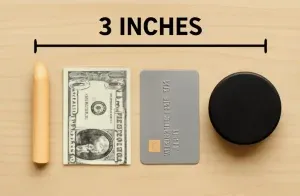
Dimensions help people understand the actual size, shape, and position of things around them. dimensionspath.com offers a useful place for readers interested in dimensions, measurements, shapes, space, sizing, and practical information connected with these subjects. The idea of dimensions appears in ordinary activities more often than most people realize. Measuring a wall before buying furniture is one example, while checking the size of a suitcase before traveling is another. Architects use dimensions when preparing building plans, engineers use them when creating components, and designers depend on them when developing products. Digital technology also uses dimensions to define images, screens, virtual objects, and three-dimensional environments. Even simple decisions can become easier when accurate measurements are available. Instead of guessing whether something will fit, people can compare actual numbers with the available space. This small change from guessing to measuring can prevent many avoidable problems. Dimensions also help different people communicate clearly because everyone involved can work with the same measurements. A designer, manufacturer, builder, and customer may all understand a product differently, but specific dimensions provide a common reference. That is why measurements remain important across so many industries and everyday situations.
Size Becomes Easier To Understand
Size can be difficult to judge when people depend only on photographs, descriptions, or visual impressions. Words such as large, compact, wide, narrow, or spacious do not mean exactly the same thing to everyone. Dimensions remove some of that uncertainty by providing actual measurements that can be compared with other objects or spaces. A desk described as spacious may look perfect online, but its listed dimensions provide a better idea of whether it will fit inside a particular room. The same applies to televisions, wardrobes, beds, kitchen appliances, shelves, and storage containers. Measuring the available area before purchasing something can save considerable time later. This is especially useful when a product needs to pass through doorways, staircases, elevators, or narrow corridors. The object may fit inside the final room but still be impossible to move into that room without careful planning. Dimensions can also help people estimate how much surrounding space will remain after an object is placed. This matters because fitting something physically is not always the same as making the space comfortable. A large sofa may technically fit inside a living room while leaving very little room for movement. Good dimensional planning considers both the object and the space around it.
Length Gives Basic Information
Length is among the simplest dimensions, yet it has countless practical uses in daily and professional situations. It describes distance along a particular direction and can apply to objects, materials, spaces, and geographical distances. A ruler works well for small items, while measuring tapes are more useful for furniture, rooms, walls, and larger objects. Longer distances may be expressed using meters, kilometers, feet, miles, or other appropriate units. Choosing the right unit makes measurements easier to understand and communicate. A small screw measured in kilometers would obviously be impractical, while a long road described only in millimeters would create unnecessary complexity. Length measurements also become important when purchasing materials because many products are sold according to their length. Fabric, cables, pipes, timber, wires, flooring materials, and fencing are common examples. Buying too little material can delay a project, while buying too much can create unnecessary waste. This is why careful measurement before purchasing materials can be valuable. People working with physical materials often follow the practical rule of measuring carefully before cutting. A small error at the beginning can become much harder to correct after a material has already been cut or installed.
Width Changes Available Space
Width describes another direction and can strongly influence whether something fits into a particular area. A doorway, hallway, table, bed, cabinet, vehicle, and storage shelf all have useful width measurements. When available space is narrow, width can become more important than overall size. A cabinet might have a suitable height and depth but still fail to fit because its width exceeds the available opening. This is why product specifications usually provide several measurements rather than one general size. Width also affects how people interact with objects because a narrow surface may provide limited working or storage space. In digital design, width often appears as a pixel measurement that describes how many pixels extend horizontally across an image or screen. Designers consider width when creating websites, advertisements, presentations, banners, and other digital materials. A layout designed for a wide display may need changes before it works properly on a narrow mobile screen. Responsive design attempts to handle these differences by allowing layouts to adjust according to available screen dimensions. Physical width and digital width are different concepts, but both demonstrate how horizontal space affects usability. Understanding width makes it easier to plan physical arrangements and digital layouts without relying completely on guesswork.
Height Adds Vertical Space
Height describes vertical distance and becomes important whenever objects need to fit within a particular clearance or provide comfortable access. Bookshelves, refrigerators, cabinets, doors, buildings, counters, and screens all have height measurements that affect how they can be used. A tall object may provide more storage, but it may also be difficult to reach without assistance. A low object may be easy to access but offer less storage capacity. Furniture designers therefore consider height along with width and depth when creating products intended for regular human use. Kitchen counters provide a good example because their height can influence comfort during cooking and preparation. Doorways also require sufficient height because people and objects need enough clearance to pass through safely. Garages, warehouses, elevators, and storage facilities often have maximum height limits that must be respected. A vehicle entering a building, for example, needs enough vertical clearance to avoid contact with overhead structures. Height also influences how people perceive rooms because taller ceilings can make an interior feel more open. This feeling is influenced by many factors, but vertical dimensions still play an important role. Measuring height accurately is therefore useful for both practical fitting and design decisions.
Depth Controls Physical Reach
Depth describes how far an object extends from its front toward its back, and this measurement can have a major effect on usability. Furniture is a common example because a sofa, desk, wardrobe, cabinet, or bookshelf can occupy considerable floor space because of its depth. A product may have an appropriate width but still be unsuitable because it extends too far into the room. Kitchen appliances often require careful depth planning because they need to align with cabinets and counters. Additional space may also be needed for doors, handles, ventilation, cables, or maintenance access. Online shoppers should pay particular attention to depth because photographs usually provide little sense of how far an object extends. A product shown from the front can look much smaller than it actually is when viewed from the side. Depth can also affect transportation because packages need to fit through doors and inside vehicles. Designers consider depth when deciding how people will reach, open, operate, or maintain an object. Excessive depth can make some products inconvenient even when they provide more storage. This shows that larger dimensions are not automatically better. The useful dimension is the one that matches the available space and intended purpose.
Area Describes Surface Coverage
Area provides information about how much surface a two-dimensional shape covers. This concept becomes practical when planning flooring, painting walls, covering tables, arranging gardens, printing materials, or designing digital layouts. For a simple rectangle, multiplying length by width gives the area when both measurements use compatible units. The calculation itself is straightforward, but accurate measurements are still necessary for useful results. If the length or width is incorrect, the calculated area will also be incorrect. Irregular rooms require more careful planning because the overall shape may need to be divided into smaller sections before the areas are combined. Construction professionals often account for additional material because cutting, fitting, damage, and installation can create waste. Digital designers also work with surface dimensions when preparing images and layouts. The amount of visible space available affects where text, photographs, buttons, and other elements can be placed. Area does not tell us everything about a space because two shapes can have the same area while having completely different proportions. A long narrow room and a compact square room could cover equal surface areas but provide very different experiences. This is why area is useful alongside other dimensional information rather than being treated as the complete picture.
Volume Measures Three Dimensions
Volume describes three-dimensional space and is useful for objects that have measurable length, width, and height. Storage boxes, rooms, containers, tanks, packages, and many manufactured products can be analyzed through volume. For simple rectangular objects, volume can be calculated by multiplying the three primary dimensions together. This measurement can help people compare storage capacity and understand how much space a container can hold. Two boxes may have similar lengths and widths but different heights, producing different volumes. Shipping companies are also interested in volume because large packages occupy significant space inside vehicles and warehouses. In some transportation systems, dimensional weight can affect shipping costs when a package takes up more space than its actual weight might suggest. Engineers use volume when designing tanks, engines, containers, buildings, and other systems where internal or occupied space matters. Volume should not be confused with mass because they describe different properties. A large container filled with a light material can have considerable volume without having an equally large mass. Understanding this distinction becomes important in science, engineering, transportation, and manufacturing. Volume is therefore another example of how several simple dimensions can combine to provide more useful information.
Units Make Numbers Meaningful
Units are essential because a measurement without a unit does not communicate enough information. A number such as thirty could represent thirty millimeters, thirty centimeters, thirty meters, or thirty inches, and each possibility describes a different physical size. Metric units include millimeters, centimeters, meters, and kilometers, while other systems commonly use inches, feet, yards, and miles. Different countries and industries may follow different measurement conventions. This means users should check the unit before comparing measurements from different sources. Converting values into one consistent unit usually makes calculations easier and reduces mistakes. A furniture buyer might measure a room in meters while finding product dimensions listed in centimeters. Converting one set of measurements before comparing them avoids confusion. Technical professionals often follow specific standards so that measurements remain consistent across drawings, plans, and manufacturing instructions. Even in everyday situations, writing the unit beside a number is a useful habit. This becomes especially important when measurements are shared with another person who was not present when the original measurement was taken. Clear units make communication more reliable. They also make calculations easier to check because anyone reading the information can understand exactly what each number represents.
Design Depends On Dimensions
Good design needs accurate dimensions because objects must function properly within their intended environments. Product designers consider measurements when creating furniture, appliances, electronics, tools, packaging, and many other items. A chair needs appropriate dimensions for sitting, while a table needs suitable height and surface area for its intended use. Electronic devices require dimensions that balance portability, screen size, internal components, battery capacity, and durability. Designers often create digital prototypes before producing physical versions because digital changes can be made more quickly and cheaply. Computer-aided design software allows professionals to adjust measurements, test arrangements, and inspect different views. This can reveal problems before materials are ordered or manufacturing begins. Dimensions also influence packaging because products need protective space without creating unnecessarily large boxes. Transportation costs can be affected by package size, making dimensional efficiency valuable for businesses. Design therefore involves more than appearance. A product can look attractive but still fail if its measurements make it uncomfortable, difficult to manufacture, or impractical to transport. Dimensions provide the practical foundation that allows creative ideas to become usable products. They connect visual decisions with physical reality.
Architecture Uses Precise Measurements
Architecture depends on dimensions at nearly every stage because buildings contain many components that must work together accurately. Floor plans include measurements for rooms, walls, windows, doors, stairs, corridors, and other structural or functional elements. Engineers use dimensional information when designing foundations, beams, columns, and other components. Construction workers rely on plans to position materials correctly and maintain consistency throughout the project. A small measurement error can become more serious when multiple components depend on the same location. A window opening that is incorrectly sized can affect the frame, surrounding wall, insulation, and interior finishes. Modern architectural software allows teams to create detailed digital models before construction begins. These models can help identify conflicts between different building systems and provide a clearer understanding of available space. Building dimensions also influence accessibility because doors, corridors, ramps, and other areas need sufficient space for people to use them comfortably. Lighting and ventilation can also depend partly on room size and opening dimensions. Architectural measurements therefore affect both appearance and practical function. A building is not successful simply because its rooms exist within a certain area. The dimensions must support safe, comfortable, and useful movement throughout the structure.
Technology Uses Digital Dimensions
Digital technology depends on dimensions in ways that are not always visible to ordinary users. Computer games use coordinates and measurements to position characters, objects, buildings, and landscapes inside virtual environments. Three-dimensional software creates digital objects by defining their size and location within a coordinate system. Virtual reality systems use spatial information to make digital environments respond to movement and position. Three-dimensional printing uses digital dimensions to create physical objects from computer models. If a model is incorrectly sized, the printed object may not fit its intended location or purpose. Digital images also have dimensions, usually expressed through pixels. A photograph might have a particular width and height that determine its resolution and display size. Videos use similar concepts because each frame contains a specific pixel arrangement. Designers need to consider these dimensions when preparing content for different screens and platforms. Changing image size without maintaining the original proportions can create stretching or distortion. Software can resize digital objects quickly, but users still need to understand what those changes mean. Dimensional knowledge helps people use digital tools more effectively because they can recognize when a size change improves usability and when it damages the original design.
Manufacturing Needs Exact Sizes
Manufacturing demonstrates perhaps the strongest need for dimensional accuracy because physical components often need to fit together with very small margins for error. Engineers create detailed drawings and digital models containing measurements that guide production. These specifications may include tolerances because real manufacturing processes cannot produce every part at infinitely exact dimensions. A tolerance defines an acceptable range within which a component can vary while still working correctly. Machines produce parts according to these requirements, and inspection equipment checks the finished results. Calipers and micrometers are common examples of tools used for precise measurement, while more advanced systems can inspect complicated components in three dimensions. A small dimensional error may prevent a part from connecting properly with another component. In mechanical systems, this can affect movement, stability, performance, or durability. Manufacturing teams therefore treat dimensions as essential technical information rather than optional details. Computer-controlled machines can follow highly precise instructions, but the quality of the final product still depends on accurate specifications. Digital modeling also allows engineers to test different dimensions before production. This can reduce wasted materials and lower the risk of producing large quantities of incorrect parts. Precision becomes particularly valuable when the same component must be produced repeatedly.
Online Shopping Uses Measurements
Product dimensions have become increasingly useful because online shopping removes the ability to physically inspect most items before purchase. Photographs can show appearance, color, texture, and general shape, but they rarely communicate accurate physical scale. A cabinet may look small beside a room photograph while actually occupying a significant amount of floor space. Checking width, height, and depth gives buyers more reliable information before placing an order. It is useful to measure the intended location first and then compare those measurements with the product specifications. Customers should also check whether the listed dimensions describe the product itself or the shipping package. These values can be quite different because boxes often include protective materials. Electronics may have separate dimensions for the device, display, stand, and package. Clothing uses another form of measurement because sizes may include chest, waist, shoulder, sleeve, inseam, and other body dimensions. Different manufacturers can use different sizing systems, so checking the specific measurement chart is usually safer than relying only on a general size label. Accurate product dimensions cannot remove every uncertainty from online shopping, but they can reduce the chances of buying something that is unsuitable for the intended space. Measuring before ordering is a small step that can save significant inconvenience later.
Proportions Connect Different Measurements
Dimensions become more useful when individual measurements are compared because proportions influence how an object looks and performs. A very tall and narrow cabinet has a different visual and practical character from a short and wide cabinet, even if both contain a similar amount of material. Furniture designers consider relationships between height, width, and depth because comfort depends on how these dimensions work together. Graphic designers use proportions when arranging text, images, buttons, and empty areas inside a layout. Aspect ratio is another common example because it describes the relationship between width and height. A screen with a wide aspect ratio looks different from a nearly square display even if both have similar overall areas. Changing one dimension without adjusting another can make an image appear stretched or compressed. Architects also consider proportions when creating windows, rooms, doors, and building facades. Engineers may study dimensional relationships when evaluating stability, performance, or structural behavior. Proportion does not always require complicated calculations. Simply comparing measurements can reveal whether an object is unusually tall, wide, shallow, or deep. This way of thinking gives people a better understanding of the object as a whole rather than viewing each measurement as an isolated number.
Conclusion
Dimensions provide a practical system for understanding size, space, shape, distance, surface coverage, and three-dimensional objects. They help with everyday activities such as buying furniture, planning rooms, checking product sizes, arranging storage, and preparing materials for projects. At a professional level, dimensions become essential in architecture, engineering, manufacturing, technology, graphic design, packaging, and construction. Length, width, height, and depth describe the basic physical extent of objects, while area and volume provide additional information about surfaces and three-dimensional space. Units make those measurements understandable because numerical values alone cannot explain physical size accurately. Digital technology has expanded the importance of dimensions through computer graphics, virtual environments, digital images, 3D modeling, and three-dimensional printing. Manufacturing requires especially precise measurements because components often need to fit together within strict tolerances. Online shopping has also made dimensional information more valuable because customers need reliable ways to judge products without seeing them physically. Proportions show how different measurements relate to one another and help explain why objects with similar sizes can still look or function very differently. The most useful approach is usually simple: measure carefully, record the correct units, compare available space, and consider how different dimensions work together. These habits can reduce mistakes, save materials, improve planning, and make decisions much easier. For readers who want to explore more information about dimensions, measurements, shapes, spatial concepts, sizing, and practical applications, visit dimensionspath.com and continue exploring useful dimensional content.
Read also :-